
- Shadow AI
How to detect and control Shadow AI
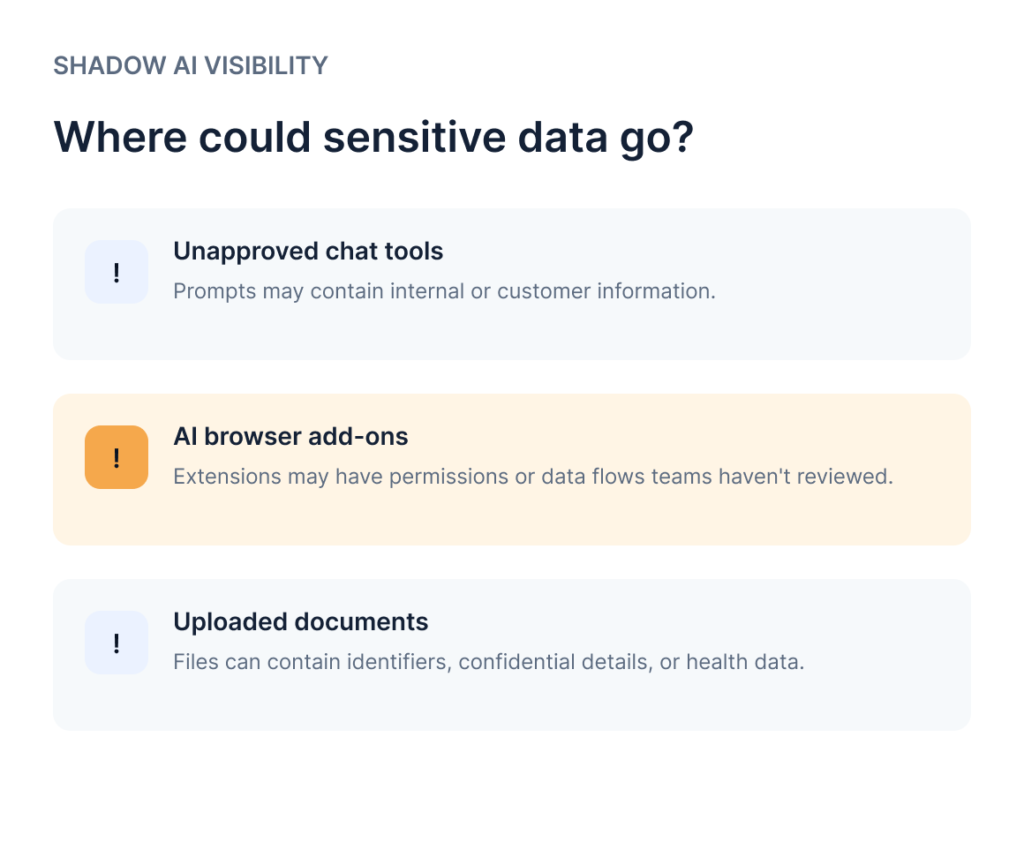
The risk is the data leaving your control
Sensitive data exposure
Prompts and uploaded files may include personal, customer, employee, or health information.
Limited visibility
Security teams may not know which tools are used or what data is shared.
Inconsistent practices
Different teams may follow different rules for approved and unapproved tools.
Four steps to detect and control shadow AI
Discover usage
Review approved-tool lists, employee workflows, browser and endpoint signals where available, and feedback from teams.
Classify the risk
Prioritize tools and workflows by data sensitivity, business purpose, vendor review, and access permissions.
Set clear rules
Define approved use cases, prohibited data, exception paths, and simple guidance employees can follow.
Apply and review controls
Use technical controls where available, train teams, monitor configured signals, and revisit policy as usage changes.
Add controls to supported AI interactions
Employee
Starts a prompt
Configured control
Checks content
Policy action
Redact or block
Audit trail
Log interaction
Make safer AI use easier than workarounds
Publish an approved path
Tell employees which tools to use and how to request exceptions.
Define sensitive data
Explain what must never be entered into AI tools.
Keep people involved
Provide training and a contact for questions or edge cases.
- Use Cases
Real-World Applications

Patient Data Exposure Through AI Tools: The Johns Hopkins Case
A recent data breach at Czech online supermarket Rohlík highlights a growing challenge for businesses: protecting the sensitive information stored

Rohlík Data Breach: The Hidden Risk of Exposed AI Conversations
A recent data breach at Czech online supermarket Rohlík highlights a growing challenge for businesses: protecting the sensitive information stored